
What's the Difference Between Forgiveness and a Hardship Program?
Listen to this article
Play the narrated version or enjoy the podcast conversation.
What's the Difference Between Forgiveness and a Hardship Program?
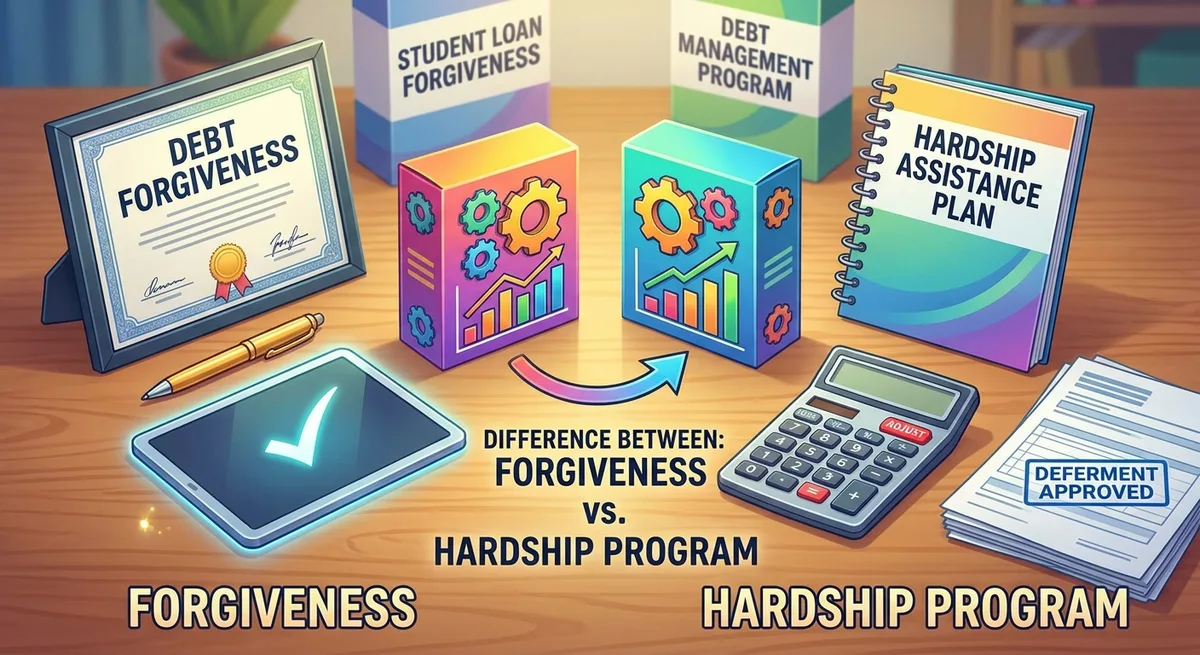
Imagine a moment of financial stress – perhaps unexpected medical bills have piled up, or a job loss has thrown your budget into disarray. You start exploring options and hear terms like "debt forgiveness" and "hardship programs." At first glance, they might sound like two sides of the same coin, both offering a lifeline. But understanding the crucial differences between forgiveness vs hardship program is vital for making the right financial decisions. Let's unravel these two distinct paths to financial relief.
Understanding Debt Forgiveness: A Path to a Clean Slate
Think of debt forgiveness as a permanent solution. When debt is forgiven, cancelled, or discharged, your obligation to repay a portion or all of that debt is completely eliminated. It's essentially a "debt write-off" by the lender. This doesn't mean your debt simply vanishes without effort; it usually comes with specific eligibility criteria and can have significant implications.
Common Avenues for Debt Forgiveness
- Student Loan Forgiveness: Programs like Public Service Loan Forgiveness (PSLF), Teacher Loan Forgiveness, or forgiveness after 20-25 years on an Income-Driven Repayment (IDR) plan can eliminate federal student loan balances. These often require fulfilling specific service requirements or making consistent payments over a long period.
- Credit Card Debt Forgiveness: While less common for the full balance, credit card companies sometimes agree to debt settlement. In this scenario, you negotiate to pay a lump sum that is less than the total amount owed, and the remaining balance is forgiven. This can significantly impact your credit score.
- Mortgage Debt Forgiveness: In situations like a short sale or foreclosure, if the sale price doesn't cover the full loan amount, the lender might forgive the "deficiency balance."
It's important to note that forgiven debt can sometimes be considered taxable income by the IRS, although there are exceptions, such as most qualified student loan forgiveness programs.
Exploring Hardship Programs: Temporary Relief and Restructuring
In contrast, a hardship program is a temporary measure designed to help you navigate a period of financial difficulty without permanently eliminating your debt. It's about providing hardship assistance vs debt relief by adjusting your current repayment terms. The debt itself doesn't disappear; it's simply made more manageable during a challenging time.
Common Types of Hardship Assistance
- Loan Deferment: This allows you to temporarily postpone your loan payments. For federal student loans, interest may or may not accrue depending on the loan type and deferment reason (e.g., in-school, unemployment, economic hardship deferment).
- Forbearance: Similar to deferment, forbearance lets you temporarily stop or reduce your loan payments. However, interest typically accrues during forbearance on all loan types, meaning your total loan balance will likely increase. This is often referred to as a "hardship forbearance."
- Modified Payment Plans: Lenders may offer to restructure your loan to make payments more affordable. This could involve extending the loan term, lowering the interest rate, or setting up a graduated payment schedule. For credit cards, this often falls under a "debt management program" or a specific creditor's hardship plan. Mortgage modifications are also common for homeowners facing distress.
Hardship programs require you to demonstrate genuine financial hardship, such as job loss, illness, or other significant life events. While they offer crucial breathing room, they often result in paying more interest over the life of the loan and can sometimes have a minor impact on your credit report, though usually less severe than defaulting on a loan.
Forgiveness vs Hardship Program: Key Differences at a Glance
To summarize the fundamental distinctions between debt forgiveness vs hardship plan, let's look at the core differences:
- Nature of Relief: Forgiveness *eliminates* the debt; a Hardship Program *adjusts* the payment terms. Think of it as a "debt write-off" versus "hardship deferment" or "hardship forbearance."
- Permanence: Forgiveness is a permanent solution; hardship programs offer temporary relief.
- Debt Status: With forgiveness, the debt obligation is removed. With a hardship program, the debt still exists, and you will eventually resume payments, potentially with additional accrued interest.
- Eligibility: Forgiveness often has stringent, specific criteria tied to program rules or the lender's willingness to settle. Hardship programs require demonstrating a temporary financial distress that makes current payments unsustainable.
- Tax Implications: Forgiven debt can be taxable income (though there are exceptions). Hardship programs generally do not have tax implications for the borrower.
- Credit Impact: Both can affect your credit. Debt settlement (a form of forgiveness) usually results in a 'settled for less' mark, while government loan forgiveness might have a less direct negative impact. Hardship programs like deferment or forbearance can be noted on your report but generally prevent the more severe negative impact of missed payments or default.
Choosing Your Path: Which Option is Right for You?

The decision between pursuing financial hardship vs loan forgiveness depends heavily on your unique circumstances:
- Consider Forgiveness if: You meet the specific eligibility requirements for government-backed programs (like Public Service Loan Forgiveness for student loans) or if your debt is truly unsustainable and you're exploring options like debt settlement or bankruptcy.
- Consider a Hardship Program if: You're facing a temporary financial setback but anticipate your situation improving in the near future. These programs offer immediate breathing room to get back on your feet without permanently eliminating the debt. This path is about managing current difficulties rather than eradicating the debt entirely.
Conclusion: Empowering Your Financial Journey
Understanding the clear distinction between debt forgiveness and a hardship program is a powerful step in managing your financial health. While both offer a way to navigate challenging financial waters, one provides a permanent exit from a debt, and the other offers a temporary shelter from the storm. By assessing your situation, exploring eligibility, and seeking professional advice if needed, you can choose the path that best suits your long-term financial well-being.
Stay informed and empower your financial decisions. Subscribe to Lendellect for more insights!
References & Sources
Federal Student Aid: Loan Forgiveness, Cancellation, and Discharge
Federal Student Aid: Deferment and Forbearance
Consumer Financial Protection Bureau: Help for struggling borrowers