
How Do You Pay Off $15,000 in Credit Card Debt?
Listen to this article
Play the narrated version or enjoy the podcast conversation.
How Do You Pay Off $15,000 in Credit Card Debt?
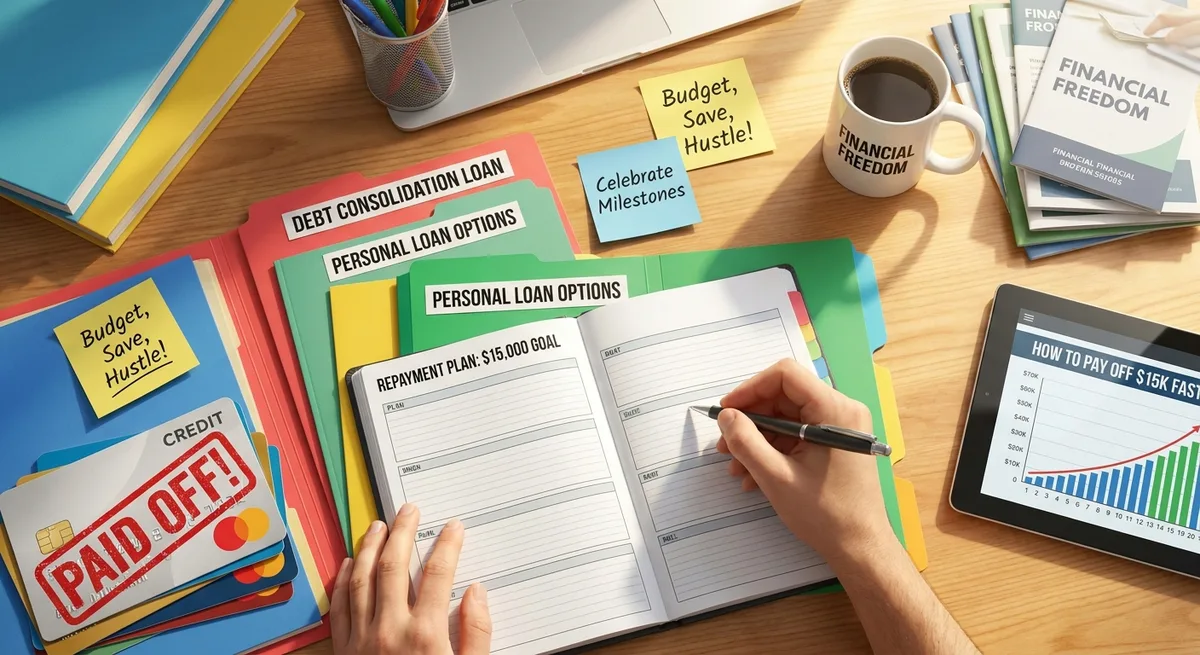
Staring at a $15,000 credit card debt can feel overwhelming, like an insurmountable mountain. You're not alone; it's a common challenge many individuals face. But here's the good news: it's a conquerable challenge. With a clear strategy, discipline, and a bit of persistence, you absolutely can pay off $15,000 in credit card debt and reclaim your financial freedom. This article will provide a clear, actionable roadmap to help you tackle your debt head-on.
Acknowledge the Situation (and Your Power)
First, take a moment to acknowledge where you are. There's no shame in having debt; the important thing is that you're now ready to take control. Realizing that you have the power to change your financial situation is the crucial first step. Getting out of $15,000 credit card debt requires a plan, and we're here to help you build one.
Step 1: Understand Your Debt and Financial Picture
Before you can craft a effective $15,000 credit card debt repayment plan, you need a complete picture of your financial landscape.
Tally Up Your Debt
Gather all your credit card statements. For each card, note down:
- The current balance
- The interest rate (APR)
- The minimum monthly payment
Organize this information, perhaps in a simple spreadsheet. This clear overview is vital for choosing the best way to pay off $15000 credit card debt.
Assess Your Income and Expenses
Creating a detailed budget is non-negotiable. Track every dollar coming in and every dollar going out for at least a month. This will help you:
- Understand where your money is truly going.
- Identify areas where you can cut back to free up more cash for debt payments.
A solid budget to pay off $15,000 debt will be your most powerful tool.
Step 2: Choose Your Debt Repayment Strategy
With your financial picture clear, it's time to pick a strategy. The two most popular methods for paying off debt are the Snowball and Avalanche methods.
The Debt Snowball Method
This method focuses on psychological wins:
- List your debts from the smallest balance to the largest.
- Make minimum payments on all cards except the one with the smallest balance.
- Throw every extra dollar you can find at that smallest debt until it's paid off.
- Once the smallest debt is gone, take the money you were paying on it and add it to the minimum payment of the next smallest debt.
The snowball method $15k credit card debt can be highly motivating as you see debts disappear quickly, building momentum.
The Debt Avalanche Method
This method focuses on saving the most money on interest:
- List your debts from the highest interest rate to the lowest.
- Make minimum payments on all cards except the one with the highest interest rate.
- Dedicate all extra funds to paying down that highest-interest debt first.
- Once the highest-interest debt is gone, take the money you were paying on it and add it to the minimum payment of the next highest-interest debt.
While perhaps less immediately satisfying than the snowball, the avalanche method is mathematically the most efficient strategy for $15k credit card debt, saving you more money in the long run.
Step 3: Explore Acceleration Options
Once you have a primary strategy, consider these options to help you pay off $15k credit card debt fast.
Balance Transfer Credit Cards

If you have a good credit score, you might qualify for a balance transfer credit card with a 0% introductory APR for a period (e.g., 12-21 months). This can give you a window to pay down a significant portion of your debt without accruing additional interest. Be mindful of balance transfer fees (typically 3-5%) and ensure you can pay off the transferred amount before the promotional period ends.
Personal Loans for Debt Consolidation
A personal loan can simplify your debt repayment. You'd take out a single loan with a fixed interest rate and use it to pay off your credit card balances. This means one monthly payment, often at a lower interest rate than your credit cards, making debt consolidation $15,000 a viable option for many.
Increase Your Income
Consider ways to bring in more money. This could involve taking on a side hustle, working overtime, selling unused items, or asking for a raise at your current job. Every extra dollar earned can be directly applied to your credit card debt.
Reduce Unnecessary Expenses
Go back to your budget. Are there subscriptions you can cancel? Can you cook at home more often instead of dining out? Even small cuts add up and free up more money to accelerate your debt repayment.
Step 4: Stay Consistent and Celebrate Milestones
Paying off $15,000 in credit card debt is a marathon, not a sprint. Consistency is key. Stick to your chosen repayment plan, revisit your budget regularly, and don't get discouraged by setbacks. Celebrate small milestones—paying off your first card, reaching the halfway mark—to keep your motivation high. Remember, the goal is getting out of $15000 credit card debt for good.
Conclusion
Facing $15,000 in credit card debt might seem daunting, but it is entirely manageable with a disciplined approach. By understanding your finances, choosing an effective repayment strategy like the snowball or avalanche method, and exploring acceleration options like balance transfers or personal loans, you can systematically dismantle your debt. Stay consistent, remain focused on your goal, and soon you'll be celebrating your financial freedom. The journey begins with that first intentional step.
Ready to take control of your finances? Subscribe to our newsletter for more expert tips and insights!
References & Sources
How do I pay off my credit card debt? | Consumer Financial Protection Bureau
Debt Avalanche vs. Debt Snowball: Which Is Best for You? | NerdWallet
What to Know About Debt Consolidation Programs | Federal Trade Commission