
What Is "Ghost" or Residual Interest?
Listen to this article
Play the narrated version or enjoy the podcast conversation.
What Is "Ghost" or Residual Interest?
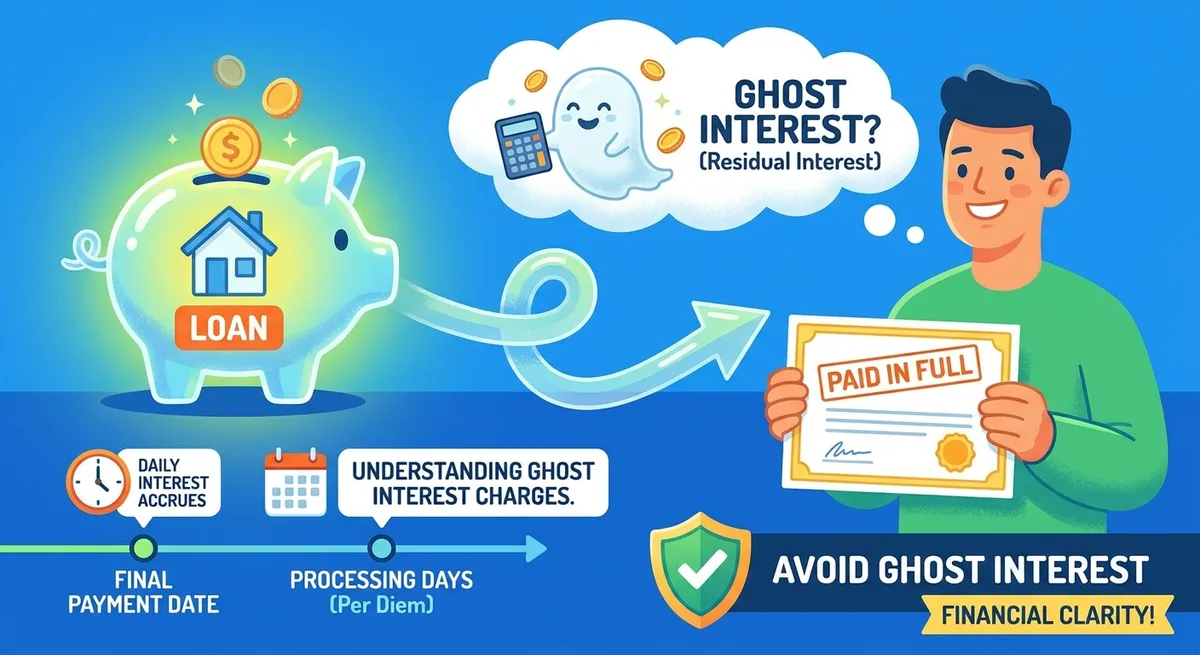
Imagine you've just made what you believe is the final payment on a loan – a mortgage, a car loan, or perhaps a personal loan. You breathe a sigh of relief, thinking you're completely free and clear. Then, a few days or weeks later, you receive an unexpected statement indicating a small, remaining balance due. This elusive, often perplexing charge is what many borrowers colloquially refer to as "ghost interest" or "residual interest."
Far from being a phantom charge or a lender's trick, ghost or residual interest is a legitimate, albeit often misunderstood, aspect of how interest accrues on certain types of loans. Understanding this concept is crucial for anyone managing debt, as it can significantly impact your final payoff amount and even delay your debt-free status. In this comprehensive guide, we'll demystify ghost interest, explain how it works, explore common scenarios, and provide actionable strategies to help you navigate and minimize its impact. By the end, you'll be equipped with the knowledge to ensure your next loan payoff is truly your last.
Defining "Ghost" or Residual Interest
At its core, "ghost interest" or "residual interest" refers to the interest that continues to accrue on a loan for a short period after a borrower has made what they *perceive* to be their final payment. It's not interest on a new loan or a penalty; rather, it's the final calculation of interest based on the loan's daily accrual method and the precise timing of your payoff.
The technical term often used by lenders to describe this daily accumulation is "per diem interest." Per diem interest explained means "interest per day." Most loans, especially those with larger principal balances like mortgages or auto loans, calculate interest daily. This daily interest accumulates until the exact moment the loan is officially closed and paid off in full, not just when your payment is sent or received.
The discrepancy arises because loan payments are often applied retrospectively. For example, your monthly mortgage payment due on the first of the month typically covers interest that accrued during the *previous* month. When you decide to pay off a loan mid-cycle, or even at the end of a cycle, there might still be a few days' worth of interest that has accumulated since your last official payment that hasn't yet been billed or accounted for in a standard payment schedule.
What is Ghost Interest: The Mechanics
To fully grasp what is ghost interest, let's break down the mechanics:
- Daily Interest Accrual: Many loans, particularly those with simple interest calculations, accrue interest every single day based on your outstanding principal balance. The formula is typically (Principal Balance × Annual Interest Rate) / 365 days.
- Payment Application: When you make a payment, a portion goes to cover the interest that has accrued since your last payment, and the remainder goes towards reducing your principal.
- Payoff Timing: If you send a payoff amount on the 15th of the month, that amount typically covers the principal balance as of a certain date, plus interest calculated up to that date. However, if the payment doesn't clear and is posted by the lender until the 20th, five additional days of interest would have accrued. This additional interest is the "ghost" or "residual" interest.
- Interest After Loan Payoff: Even if your final payment covers the principal and all accrued interest up to the date it's *sent*, there's often a gap between when you send the money and when the lender processes it and officially closes the loan. Interest continues to accrue during this processing period.
Common Scenarios for Residual Interest
Residual interest definition is most frequently encountered in these financial products:
- Mortgage Residual Interest: This is arguably the most common and impactful area. When you request a mortgage payoff statement, it usually provides an amount valid for a specific date in the near future. This includes projected per diem interest. If your payment arrives and is processed after that validity date, you'll owe the additional accrued interest.
- Auto Loans: Similar to mortgages, car loans often accrue interest daily. If you pay off your car loan mid-month or if the processing takes a few extra days, a small amount of residual interest can pop up.
- Personal Loans: Many personal loans also use a daily interest accrual method. Depending on your lender's payment processing times, you might encounter ghost interest when settling the final balance.
- Student Loans: While many federal student loans are not simple interest, private student loans often are, and the same principles of daily interest accrual apply.
Understanding how residual interest works in these contexts is key to avoiding surprises. The total amount might seem small, perhaps just a few dollars, but it's enough to keep your loan account technically open and could even affect your credit report if not fully satisfied.
The Impact of Unpaid Ghost Interest
While often small, an unpaid ghost interest balance can have several negative ramifications:
- Delayed Loan Closure: Your loan account won't be officially closed until every last cent of interest is paid.
- Credit Report Implications: An open loan account with a small outstanding balance, even if only a few dollars, could potentially be reported to credit bureaus as overdue if the lender doesn't consider it fully paid. This can negatively impact your credit score.
- Unexpected Bills: You might receive subsequent statements for these small amounts, which can be confusing and frustrating.
- Difficulty with Property Title (Mortgages): For mortgages, an open balance, no matter how small, means the lien on your property isn't fully released, complicating future transactions.
Avoiding Ghost Interest: Your How-To Guide

The good news is that avoiding ghost interest is entirely possible with proper planning and communication. Here's how residual interest works and how you can proactively prevent it:
1. Always Request a Payoff Quote
This is the golden rule. Do not simply rely on your last statement or an online balance. Always contact your lender directly and request a formal "payoff quote" or "payoff statement."
- Specific Date: This quote will provide the exact amount required to fully pay off your loan on a specific future date (the "good through" date).
- Includes Per Diem: It will explicitly include the principal balance, all accrued interest up to that date, and often the daily interest on loans amount (per diem) that will continue to accrue.
- Factor in Processing Time: When you receive the quote, choose a "good through" date that gives you ample time for your payment to be sent, received, and processed by the lender. Add a few extra buffer days.
2. Understand Per Diem Interest
Ask your lender what your current "per diem" interest amount is. Knowing this figure allows you to calculate potential additional interest if your payment is delayed. This helps with understanding ghost interest charges effectively.
3. Account for Payment Processing Time
When sending your final payment:
- Mail Delays: If mailing a check, factor in several business days for delivery, plus 1-3 business days for the lender to process it after receipt.
- Online Payments: Even electronic payments can take 1-3 business days to post to your account. Confirm the posting date, not just the submission date.
- Wire Transfers: For time-sensitive payoffs, especially for mortgages, a wire transfer is often the most reliable method for same-day or next-day posting, though it may incur a fee.
4. Pay Slightly More Than the Quote (Strategically)
Consider sending a payment that is slightly more than the exact payoff quote, especially if you're concerned about potential delays. For example, if the quote is $10,000, and the per diem interest is $5, you might send $10,015. Any overpayment will be refunded to you by the lender.
5. Confirm Loan Closure
After making your final payment, follow up with your lender. Request written confirmation that your loan has been paid in full and the account is closed. For mortgages, also confirm that the lien on your property has been released.
6. Keep Records
Retain copies of your payoff quote, proof of payment (e.g., check copy, wire transfer confirmation), and the lender's written confirmation of loan closure. These records are invaluable if any issues arise later.
Conclusion
Understanding ghost interest charges, or residual interest, doesn't have to be a daunting task. It's a natural consequence of how daily interest accrues on many loans and the time it takes for payments to process. By being proactive, requesting accurate payoff quotes, factoring in processing times, and confirming your loan's closure, you can avoid the frustration and potential pitfalls of this often-overlooked financial detail.
Empower yourself with knowledge, and ensure that when you celebrate being debt-free, you truly are. Don't let a small, lingering interest charge haunt your financial peace of mind.
Read more about managing your loans and achieving financial freedom.
References & Sources
Per Diem Interest: How It Works and What It Means for Borrowers