
What Does 10 Years of Minimum Payments Actually Cost?
Listen to this article
Play the narrated version or enjoy the podcast conversation.
What Does 10 Years of Minimum Payments Actually Cost?
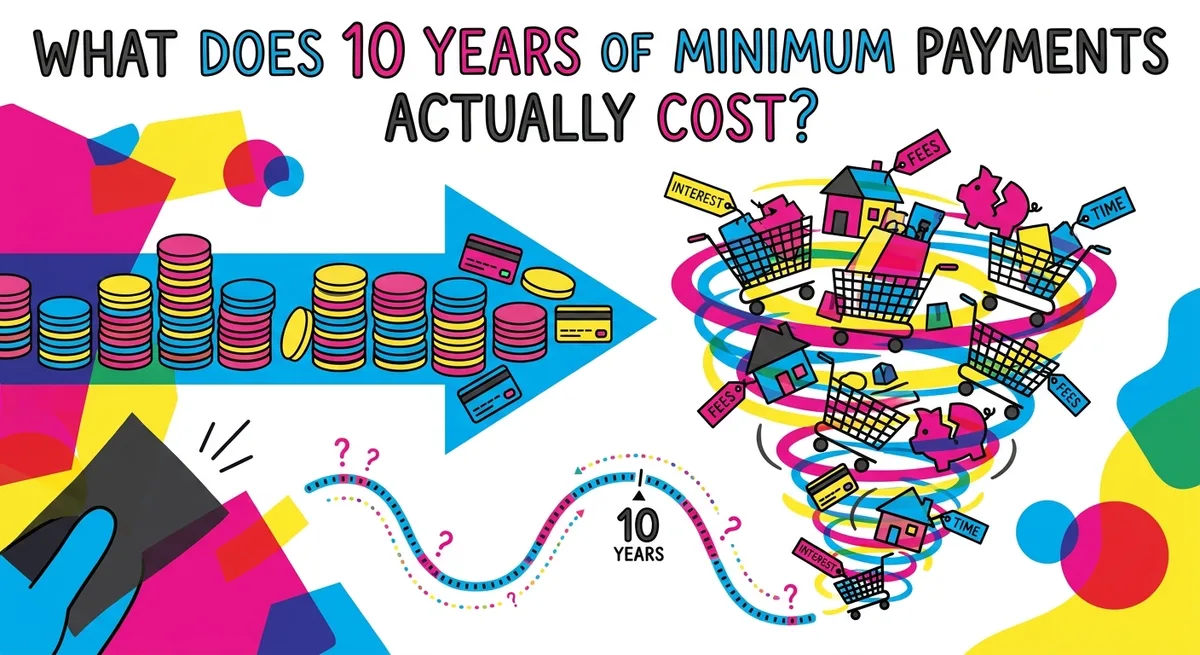
The allure of the minimum payment on your credit card statement is undeniable. It looks manageable, a small figure that seems to keep your account in good standing without straining your immediate budget. For many, it’s a financial safety net, a temporary solution in tight months, or simply a habitual choice. However, what if that “temporary” choice stretches into a decade? The true cost of relying on minimum payments for 10 years is far more substantial, complex, and insidious than most people realize. It’s a financial trap that can silently erode your wealth, delay your financial goals, and keep you tethered to debt for much longer than necessary.
As a financial professional, Lendellect aims to shed light on these hidden costs. This article will dissect the actual impact of making only minimum payments over an extended period, revealing the compounded interest, the lost opportunities, and the significant financial burden you’ll incur. By understanding the mechanics of minimum payments, you can empower yourself to make more informed decisions and break free from the cycle of costly debt.
The Allure of the Minimum Payment
At first glance, a minimum payment seems like a helpful feature. Credit card companies design them to be low, typically a small percentage of your outstanding balance (e.g., 1-3%) or a fixed amount like $25, whichever is greater. This low barrier to entry makes debt seem more manageable, providing immediate relief from the full weight of your balance.
But this apparent ease is precisely what makes minimum payments so dangerous. They create a false sense of security, allowing individuals to maintain what appears to be a healthy credit score while unknowingly accumulating significant long-term debt. The temptation to make just the minimum is strong, especially when juggling other financial obligations, but it’s a choice with profound and often devastating long-term financial consequences.
Unmasking the True Cost: Interest, Time, and Opportunity
To truly grasp the impact of minimum payments, we must look beyond the monthly statement and consider three critical factors: the relentless march of accrued interest, the extended time it takes to repay, and the significant opportunity costs.
The Silent Killer: Accrued Interest
The primary driver behind the escalating cost of minimum payments is compound interest. Credit card interest rates, often ranging from 15% to 25% APR (Annual Percentage Rate) or even higher, are applied to your outstanding balance. When you make only the minimum payment, a significant portion, sometimes nearly all of it, goes towards paying off the interest charged that month. Very little, if any, of your payment reduces the principal balance – the original amount you borrowed.
This means your debt barely shrinks. Each month, the high-interest rate continues to apply to a balance that hasn't significantly decreased, leading to a snowball effect where interest begets more interest. Over 10 years, this cycle can result in paying several times the original amount of your debt in interest alone, while the principal balance remains stubbornly high.
The Endless Cycle: Time to Repay
One of the most shocking revelations about minimum payments is how long it actually takes to pay off debt. What might seem like a manageable debt of a few thousand dollars can take 20, 30, or even more years to fully repay if you only ever make the minimum payment. This extended repayment period prolongs the stress, the financial burden, and the mental weight of being in debt, effectively delaying your financial freedom for decades.
Think about it: carrying debt for 10 years means a full decade where a significant portion of your income is siphoned off to creditors, not invested in your future. It's an endless treadmill where every step forward is met with another step back due to accumulating interest.
The Opportunity Cost: What You Miss Out On
Perhaps the most understated cost of minimum payments is the opportunity cost. Every dollar you spend on high-interest credit card debt is a dollar that cannot be used for something else that could build your wealth or improve your quality of life. Consider what you could have done with the thousands of dollars paid in interest over a decade:
- Savings and Investments: That money could have been contributing to an emergency fund, a down payment for a home, retirement savings, or investments that grow over time, thanks to the power of compound interest working for you instead of against you.
- Education or Skill Development: Funding for a new degree, certification, or skill that could boost your career and earning potential.
- Wealth Building: Investing in a small business, real estate, or other assets that appreciate in value.
- Experiences: Travel, family vacations, or personal pursuits that enrich your life.
Instead, these funds are effectively lost, gone forever to credit card companies, leaving you with less financial security and a delayed path to achieving your personal and financial aspirations.
A Hypothetical Scenario: The $5,000 Credit Card Debt
Let's illustrate the true cost with a common scenario. Imagine you have a credit card balance of $5,000 with a relatively standard APR of 20%. Your credit card company requires a minimum payment of 2% of the outstanding balance or $25, whichever is greater.
- Initial Minimum Payment: 2% of $5,000 = $100.
- After 10 Years of Minimum Payments: While a precise, month-by-month calculation is complex due to the changing balance and minimum payment, common financial models show sobering results. After a full decade of consistently making only the minimum $100 payment (which would decrease over time as the principal slowly reduces), you would have paid thousands of dollars in interest. The shocking part? Your original $5,000 debt would likely still be substantial, possibly over $3,000, $4,000, or even more, depending on the exact payment structure and how the minimum payment floor interacts with the percentage.
- Total Cost to Repay: If you continued paying only the minimum, that initial $5,000 debt could take well over 20 years to pay off entirely, and the total amount you would have paid – including principal and interest – could easily exceed $10,000, effectively doubling the original cost of your purchases.
This hypothetical example clearly demonstrates that after 10 years of diligent minimum payments, you would have sacrificed a significant portion of your income to interest, with minimal progress towards becoming debt-free.
Breaking the Cycle: Strategies to Accelerate Debt Payoff
The good news is that you don’t have to be a victim of the minimum payment trap. There are actionable strategies you can implement to significantly reduce your debt faster and save thousands of dollars in interest.
Prioritize More Than the Minimum
This is the most crucial step. Even paying a little extra each month can make a dramatic difference. Every additional dollar beyond the minimum directly reduces your principal balance, which in turn reduces the amount of interest charged in subsequent months. Use a credit card payoff calculator to see the impact of even an extra $25 or $50 a month.
Debt Snowball or Debt Avalanche
These are popular and effective strategies for tackling multiple debts:
- Debt Snowball: Pay the minimum on all debts except for the smallest one, which you attack with all extra funds. Once the smallest is paid off, roll that payment amount into the next smallest debt. This method offers psychological wins.
- Debt Avalanche: Pay the minimum on all debts except for the one with the highest interest rate, which you attack aggressively. Once that’s paid, move to the next highest interest rate. This method saves the most money on interest.
Consider Balance Transfers or Personal Loans
If you have good credit, a balance transfer credit card with an introductory 0% APR period can give you a window to pay down a significant portion of your principal without incurring interest. Be mindful of balance transfer fees and ensure you can pay off the balance before the promotional period ends. Alternatively, a personal loan with a lower, fixed interest rate can consolidate high-interest credit card debt into a single, more manageable monthly payment.
Create a Budget and Track Your Spending
Understanding where your money goes is fundamental. A detailed budget can help you identify areas where you can cut back, freeing up more funds to put towards your debt. Tracking your spending reveals habits that might be hindering your progress.
Increase Your Income
Look for opportunities to boost your earnings. This could involve taking on a side hustle, asking for a raise, or pursuing additional skills that command a higher salary. Any extra income can be directly channeled towards aggressive debt repayment.
Conclusion
The idea of making minimum payments for 10 years might seem like a passive, harmless approach to managing debt, but the reality is starkly different. It’s a financially draining strategy that results in thousands of dollars wasted on interest, an endlessly prolonged repayment period, and countless lost opportunities for financial growth. The true cost extends beyond mere numbers, impacting your peace of mind and long-term financial security.
By understanding the mechanisms of interest and committing to proactive debt management strategies, you can break free from this costly cycle. Take control of your financial future, pay more than the minimum, and transform your debt burden into a clear path towards financial freedom. Your future self will thank you for making informed choices today.
Want more insights on managing your finances and achieving your goals? Subscribe to Lendellect for expert advice and actionable strategies delivered straight to your inbox.
References & Sources
How Long Will It Take to Pay Off My Credit Card?
Credit card pay-off calculator
The True Cost of Paying Only the Minimum on Your Credit Card