
How Many Points Does a Typical Domestic Flight Cost?
Listen to this article
Play the narrated version or enjoy the podcast conversation.
How Many Points Does a Typical Domestic Flight Cost?
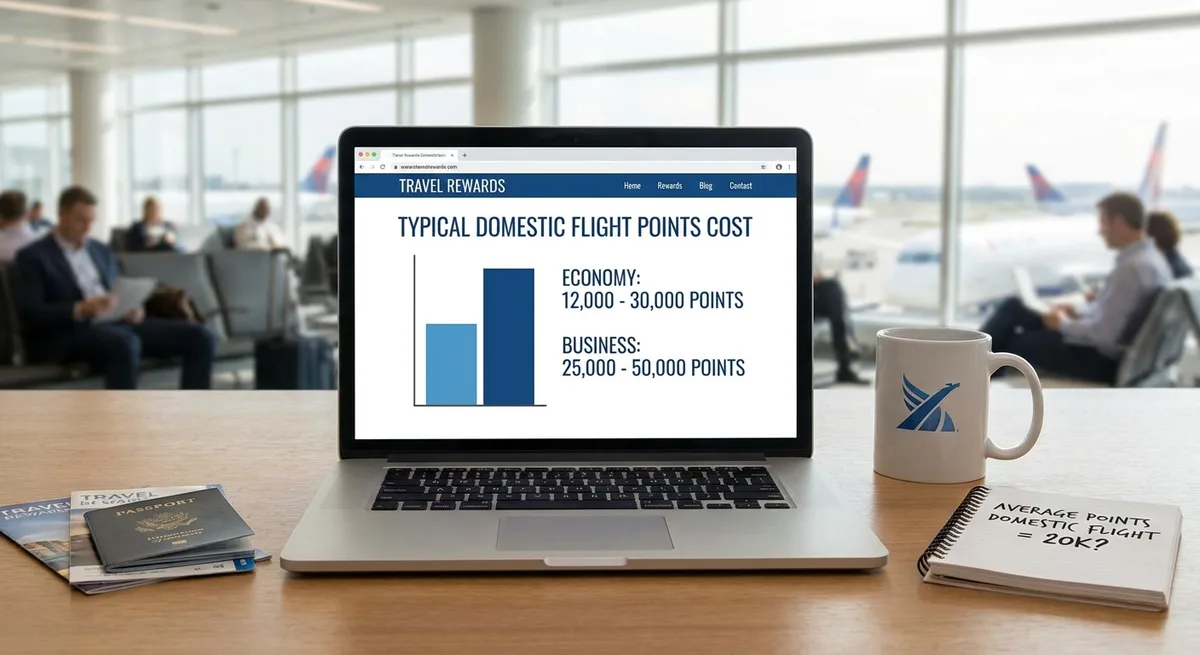
Ever dreamed of booking a domestic flight without opening your wallet for cash, instead using those hard-earned airline miles or credit card points? You’re not alone! Redeeming points for flights can feel like a superpower, turning everyday spending into exciting travel experiences. But if you’ve ever tried to figure out exactly "how many points does a typical domestic flight cost?" you quickly realize it's less like a simple price tag and more like a mysterious riddle.
The truth is, there’s no single, straightforward answer. The cost of a domestic flight in points can vary wildly – sometimes by thousands of points – even for the same route. It depends on a multitude of factors that we’re going to unravel together. By the end of this article, you’ll have a much clearer understanding of what to expect and how to find the best deals for your next domestic adventure using points.
Understanding the Variables: Why Points Aren't Fixed
Unlike a cash fare that usually has a clear price, the number of points required for a flight is highly dynamic. Think of it like a puzzle with many pieces. Here are the main factors that influence how many points you’ll need:
Airline Loyalty Program
Each airline has its own loyalty program (e.g., American Airlines AAdvantage, Delta SkyMiles, United MileagePlus, Southwest Rapid Rewards). These programs have different "award charts" or dynamic pricing models that dictate how many points a flight costs. Some still use a zone-based or distance-based chart for certain awards, while many have shifted to a more fluid, cash-linked dynamic pricing system.
Route and Distance
It stands to reason that a longer flight typically costs more points than a shorter one. A quick hop from Los Angeles to San Francisco will require fewer points than a cross-country journey from New York to Seattle. High-demand routes also tend to cost more points, especially during peak travel times.
Time of Booking
Booking far in advance (sometimes 6-11 months out) often yields the best award availability and lower point costs, especially for "saver" level awards. As the departure date approaches, especially within a few weeks, point costs tend to skyrocket, just like cash prices.
Travel Season and Demand
Flying during peak seasons (holidays, summer, spring break) or on popular travel days (Fridays, Sundays) will almost always require more points. Off-peak travel, mid-week flights, or early morning/late-night departures often offer better redemption values.
Class of Service
Are you looking for economy, premium economy, business class, or first class? The more luxurious the experience, the more points it will demand. A business class domestic flight can easily cost two to three times (or more!) the points of an economy seat on the same flight.
Award Availability and Tier
Airlines often have different tiers of award flights: "saver" awards (fewer points, limited availability) and "standard" or "anytime" awards (more points, better availability). Finding saver awards is key to maximizing your points, but they are often capacity-controlled.
Typical Point Costs for Major US Domestic Airlines (Economy Class)
To give you a better idea, let's look at some general ranges for popular US airlines for a one-way domestic economy flight. Keep in mind these are estimates and can fluctuate significantly due to dynamic pricing.
American Airlines AAdvantage
- Short-haul (under 500 miles): Often starts around 7,500 - 10,000 AAdvantage miles.
- Medium-haul (500-1,500 miles): Typically ranges from 12,500 - 20,000 AAdvantage miles.
- Long-haul (1,500+ miles, e.g., transcontinental): Can range from 20,000 - 30,000+ AAdvantage miles.
- Note: American uses dynamic pricing, so these are starting points. Last-minute or high-demand flights can be much higher.
Delta Air Lines SkyMiles
- Short-haul: Can sometimes be as low as 5,000 - 7,000 SkyMiles, especially on sale.
- Medium-haul: Often 15,000 - 25,000 SkyMiles.
- Long-haul: Commonly 25,000 - 40,000+ SkyMiles.
- Note: Delta is fully dynamic. Finding "low" award prices requires flexibility and searching during sales.
United Airlines MileagePlus
- Short-haul: Often starts around 7,500 - 10,000 MileagePlus miles.
- Medium-haul: Typically 12,500 - 25,000 MileagePlus miles.
- Long-haul: Ranges from 25,000 - 35,000+ MileagePlus miles.
- Note: United also uses dynamic pricing. Their saver awards tend to be competitive when available.
Southwest Airlines Rapid Rewards
- Southwest's point value is tied directly to the cash price of the ticket, making it very straightforward. Roughly, 70-80 points equal $1.
- Typical ranges:
- Short/Medium-haul: 5,000 - 15,000 Rapid Rewards points.
- Long-haul: 15,000 - 30,000+ Rapid Rewards points.
- Note: The better the cash fare, the fewer points you'll need. This also means high cash fares mean high point costs. Plus, you don't pay change fees, only fare differences.
Alaska Airlines Mileage Plan
- Alaska uses a distance-based award chart for their own flights.
- Short-haul (up to 700 miles): Typically 7,500 - 10,000 Mileage Plan miles.
- Medium-haul (701-1,400 miles): Usually 12,500 - 15,000 Mileage Plan miles.
- Long-haul (1,401-2,100 miles): Often 15,000 - 20,000 Mileage Plan miles.
- Transcontinental (2,101+ miles): Generally 20,000 - 30,000 Mileage Plan miles.
- Note: Alaska is known for having valuable partner redemptions too, but these are for their own flights.
JetBlue TrueBlue
- Similar to Southwest, JetBlue's TrueBlue points are revenue-based, meaning the point cost fluctuates with the cash price of the ticket.
- Typical ranges:
- Short/Medium-haul: 5,000 - 15,000 TrueBlue points.
- Long-haul (e.g., transcontinental Mint class): Economy can be 15,000 - 30,000+ points.
- Note: The value of TrueBlue points can vary slightly, but generally hovers around 1.3-1.5 cents per point.
Maximizing Your Points: Tips for Finding the Best Deals

While there's no magic number for every flight, you can definitely improve your chances of scoring a great redemption. Here’s how:
- Be Flexible with Dates: This is arguably the biggest factor. Flying mid-week, during off-season, or avoiding major holidays will almost always save you points.
- Be Flexible with Airports: If possible, check nearby airports. Sometimes flying into a smaller regional airport or from a slightly further one can significantly reduce point costs.
- Book in Advance: The sweet spot for finding "saver" level awards is often 2-6 months out, sometimes even 11 months in advance when schedules first open.
- Search One-Way: Often, booking two separate one-way tickets can be cheaper in points than a round trip, especially if you mix airlines or loyalty programs.
- Look for Sales: Airlines frequently run promotions on award flights. Sign up for email alerts from your preferred programs or check dedicated deal sites.
- Consider Partner Airlines: Many airlines are part of alliances (like Star Alliance, SkyTeam, Oneworld). You can often use points from one airline to book a flight on a partner airline, sometimes at better rates.
- Use Award Search Tools: Tools like Seats.aero (for specific airlines), AwardHacker.com (for general comparisons), or the individual airline's award calendars can help you identify dates with lower point requirements.
The "Typical" Range for a Domestic Economy Flight
After all this, what's a reasonable expectation? For a one-way domestic economy flight in the US, you can generally expect to pay anywhere from 7,500 to 30,000 points. Short-haul flights will usually be at the lower end, while cross-country or high-demand routes will lean towards the higher end of this range. Business or First Class domestic flights could easily be 50,000 points or more for a single flight.
The key takeaway is that getting a flight for under 15,000 points one-way is usually considered a good deal, while anything over 30,000 points for economy might be worth reconsidering if the cash price is also high, or if you have flexibility to find a better redemption.
Conclusion
While the exact number of points for a domestic flight remains elusive due to dynamic pricing and numerous variables, understanding these factors empowers you to make smarter redemption decisions. By being strategic with your search, flexible with your dates and destinations, and savvy about airline loyalty programs, you can unlock incredible value from your points and travel more for less. Don't let the complexity deter you; instead, embrace the challenge of becoming a points-savvy traveler!
Ready to start planning your next points-funded adventure? Stay informed and get more tips on maximizing your travel rewards.
Subscribe to our newsletter for more travel tips and insights!
References & Sources
How Many Miles Do You Need For A Free Flight?