
How Is the Minimum Payment Calculated?
Listen to this article
Play the narrated version or enjoy the podcast conversation.
How Is the Minimum Payment Calculated?
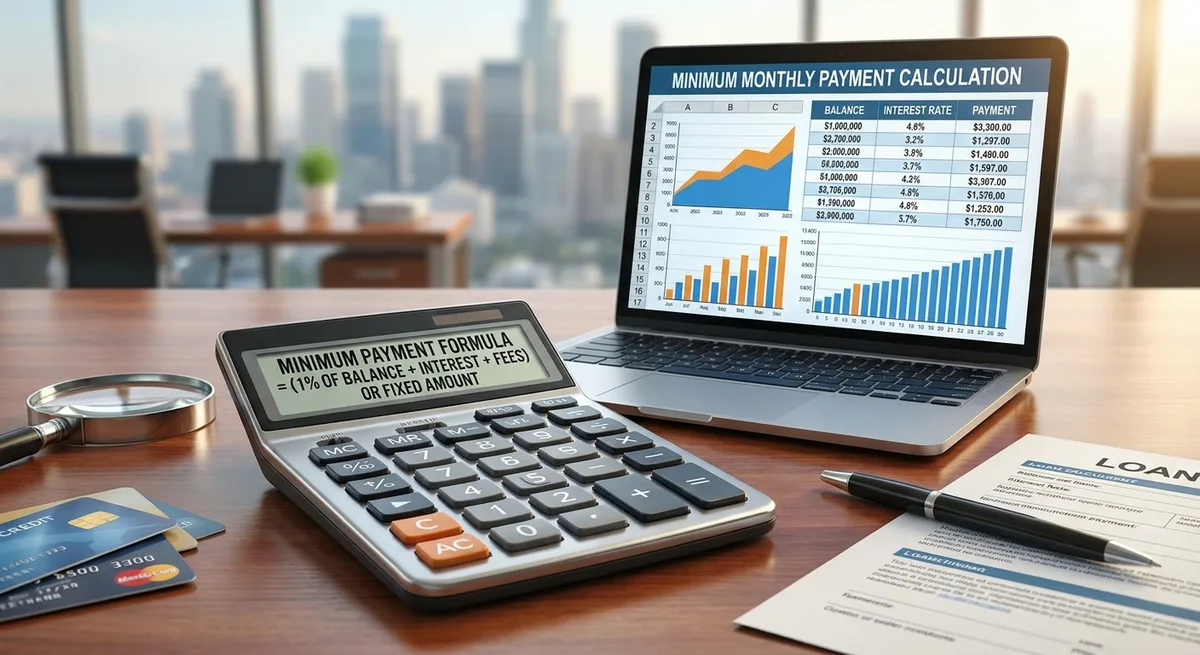
For many individuals, the minimum payment on a credit card statement or loan document can feel like a small, almost arbitrary number. It’s the lowest amount you can pay to keep your account in good standing, but understanding how this figure is actually determined is far from arbitrary. In fact, grasping the mechanics behind your minimum payment is a crucial step towards effective financial management and can profoundly impact your debt repayment journey.
This comprehensive guide from Lendellect will demystify the minimum payment calculation process. We'll explore the various components that contribute to this number, differentiate between credit cards and other loan types, and highlight the key factors affecting minimum payment. By the end of this article, you’ll not only know how minimum payment is determined but also understand why paying more than the minimum is often a financially savvy decision.
What Exactly Is a Minimum Payment?
At its core, a minimum payment is the lowest amount of money your lender requires you to pay each billing cycle to avoid late fees, penalties, and negative marks on your credit report. It’s the price of "staying current" on your debt. While seemingly straightforward, this figure is carefully computed by your lender based on your outstanding balance, interest rates, and specific account terms.
From the lender's perspective, the minimum payment serves several purposes: it ensures a steady stream of income (primarily interest), keeps customers engaged with their debt, and encourages incremental repayment. For you, the customer, it provides flexibility, allowing you to manage cash flow. However, this flexibility comes with a trade-off, which we’ll explore later.
The Core Mechanics: Credit Card Minimum Payments
Credit cards are perhaps the most common place where people encounter minimum payments, and their calculation can be surprisingly complex due to the revolving nature of the debt. There isn't a single, universal credit card minimum payment formula, as it can vary slightly between issuers and even different card products. However, the underlying principles are consistent.
Common Calculation Components
Most credit card issuers use a formula that combines several elements to arrive at your minimum monthly payment calculation:
- A Percentage of Your Outstanding Balance: This is often the largest component. Many issuers calculate a small percentage of your total balance (e.g., 1%, 2%, 3%, or sometimes even 4% or 5%). This percentage is applied to your balance at the end of the billing cycle.
- Accumulated Interest Charges: The interest accrued on your balance since your last payment is almost always included in your minimum payment. This ensures the lender recovers their cost of lending you money.
- Any Late Fees or Other Penalties: If you incurred a late payment fee or any other penalty during the previous cycle, these amounts are often rolled into your current minimum payment.
- A Portion of the Principal Balance: While interest and fees make up a significant chunk, a small part of your minimum payment typically goes towards reducing the principal balance.
The "Greater Of" Rule
A very common practice among credit card companies is to set the minimum payment as a specific dollar amount OR a calculated percentage of your balance plus interest and fees, whichever is greater. For example, your cardholder agreement might state: "Your minimum payment will be 2% of your outstanding balance plus new interest and fees, or $25, whichever is higher."
- If your calculated minimum payment (2% + interest + fees) comes out to $18, you would still be required to pay $25.
- If the calculation results in $45, your minimum payment would be $45.
This "greater of" rule ensures that even small balances generate a reasonable payment amount, and it guarantees that the issuer covers at least their processing costs for very small debts.
Impact of New Activity
The revolving nature of credit card debt means your minimum payment can fluctuate significantly from month to month. Any new purchases, cash advances, or balance transfers you make will increase your outstanding balance. This, in turn, will lead to a higher calculated minimum payment in subsequent billing cycles, as the percentage will be applied to a larger sum.
Promotional Rates and Minimum Payments
If you're benefiting from a promotional APR (e.g., 0% for 12 months), your minimum payment during that period might primarily cover a portion of the principal and any fees, with no interest charges being applied. However, it's crucial to remember that once the promotional period ends, any remaining balance will be subject to your standard APR, and your minimum payment will likely jump significantly as interest charges are reintroduced into the minimum monthly payment calculation.
Lender-Specific Policies
It's important to reiterate that specific percentages and formulas can vary. Your credit card agreement (the document you received when you opened the account) is the definitive source for understanding what determines minimum payment for your specific card. Always refer to it or contact your card issuer directly if you have questions about your particular minimum payment calculation.
Minimum Payments for Loans (Beyond Credit Cards)
While credit cards are a primary example of variable minimum payments, other types of loans also have minimum payment structures. However, these are generally more predictable.
Amortized Loans (Mortgages, Auto Loans, Student Loans)
For amortized loans, such as mortgages, auto loans, and many student loans, the loan minimum payment calculation is based on an amortization schedule. This schedule pre-determines a fixed monthly payment amount over the life of the loan. Each payment includes a portion that goes towards the principal and a portion that covers the interest.
In the early stages of an amortized loan, a larger percentage of your payment goes towards interest, and a smaller percentage reduces the principal. As the loan matures, this ratio gradually shifts, with more of your payment chipping away at the principal. These payments are designed to fully pay off the loan by the end of its term, assuming you make all payments on time.
Personal Loans
Many unsecured personal loans are also structured as amortized loans with fixed monthly payments. The calculation works similarly: a set amount is determined at the outset, designed to repay the loan plus interest over a fixed period. The predictability of these payments makes budgeting easier compared to revolving credit.
Factors That Influence Your Minimum Payment
To fully grasp how your minimum payment is determined, consider these key influencing factors:
- Outstanding Balance: The higher your balance, the higher your minimum payment will generally be, especially for credit cards where a percentage of the balance is a core component.
- Interest Rate (APR): A higher Annual Percentage Rate means more interest accrues each month, and this increased interest will be included in your minimum payment.
- Fees: Annual fees, late payment fees, over-the-limit fees, or cash advance fees can all inflate your minimum payment.
- Type of Debt: Revolving credit (like credit cards) will have variable minimums, while installment loans (like mortgages) will have fixed minimums based on an amortization schedule.
- Lender's Specific Terms: Each lender or card issuer has its own unique formula and thresholds (e.g., the percentage of the balance, the fixed minimum dollar amount).
- Recent Account Activity: For revolving credit, any new charges, balance transfers, or cash advances since your last statement will directly impact the subsequent minimum payment.
Why Understanding the Calculation Matters
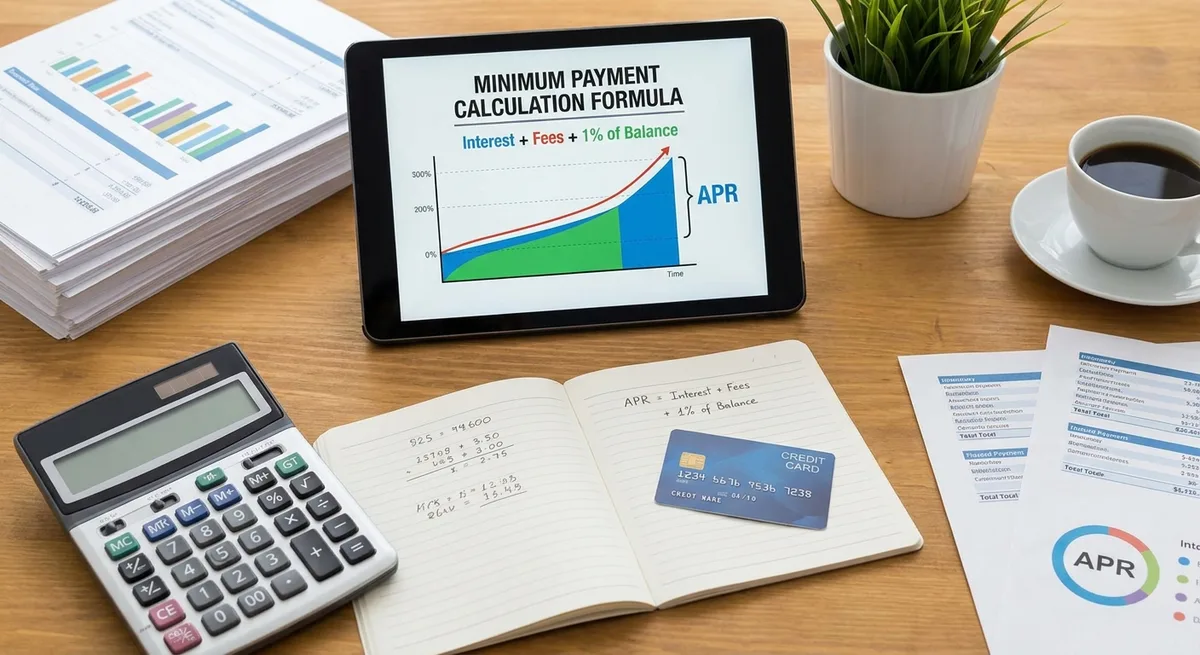
Knowing how minimum payment is calculated is more than just academic; it's vital for informed financial decision-making. Only paying the minimum can lead to significant long-term consequences:
- Extended Repayment Period: Because only a small portion of your minimum payment typically goes towards the principal, it can take years, or even decades, to pay off a substantial credit card balance if you only make minimum payments.
- Increased Total Interest Paid: The longer you carry a balance, the more interest you accrue. Paying only the minimum can result in paying back several times the original amount borrowed in interest alone.
- Impact on Credit Score: While making minimum payments keeps your account "current," it doesn't necessarily improve your credit utilization ratio (the amount of credit you're using versus your total available credit). A high utilization ratio can negatively affect your credit score.
- Stagnant Debt Reduction: It creates a cycle where you're constantly "treading water" rather than making real progress in reducing your overall debt burden.
Beyond the Minimum: Strategies for Smarter Debt Management
Now that you understand how to calculate minimum payment and its implications, here are some strategies to move beyond merely meeting the minimum:
- Always Pay More Than the Minimum: Even an extra $10 or $20 above your minimum payment can make a substantial difference over time, accelerating principal reduction and reducing total interest.
- Target High-Interest Debt: If you have multiple debts, focus on paying down the one with the highest interest rate first (the "debt avalanche" method). Once that's paid off, roll that payment amount into the next highest-interest debt.
- Consider Debt Consolidation: For high-interest credit card debt, a personal loan or balance transfer card with a lower interest rate could help streamline payments and reduce overall interest costs.
- Create a Budget: Understanding your income and expenses is foundational. A clear budget can help you identify areas where you can free up funds to put towards debt.
- Negotiate with Lenders: If you're struggling to even make minimum payments, contact your lenders. They may offer hardship programs, lower interest rates, or modified payment plans.
Conclusion: Taking Control of Your Financial Future
The minimum payment isn't just a number on your statement; it's a critical financial indicator. By truly understanding how minimum payment is calculated and the various factors that influence it, you gain the knowledge to make more informed decisions about your debt. It’s the first step in moving from merely managing debt to actively mastering it.
Don't let the simplicity of the minimum payment obscure its long-term financial impact. Empower yourself with this knowledge and use it to proactively shape your financial future. For more insights and strategies to master your personal finance, be sure to subscribe to our newsletter!