
How Do You Negotiate a Lower Credit Card Interest Rate?
Listen to this article
Play the narrated version or enjoy the podcast conversation.
How Do You Negotiate a Lower Credit Card Interest Rate?
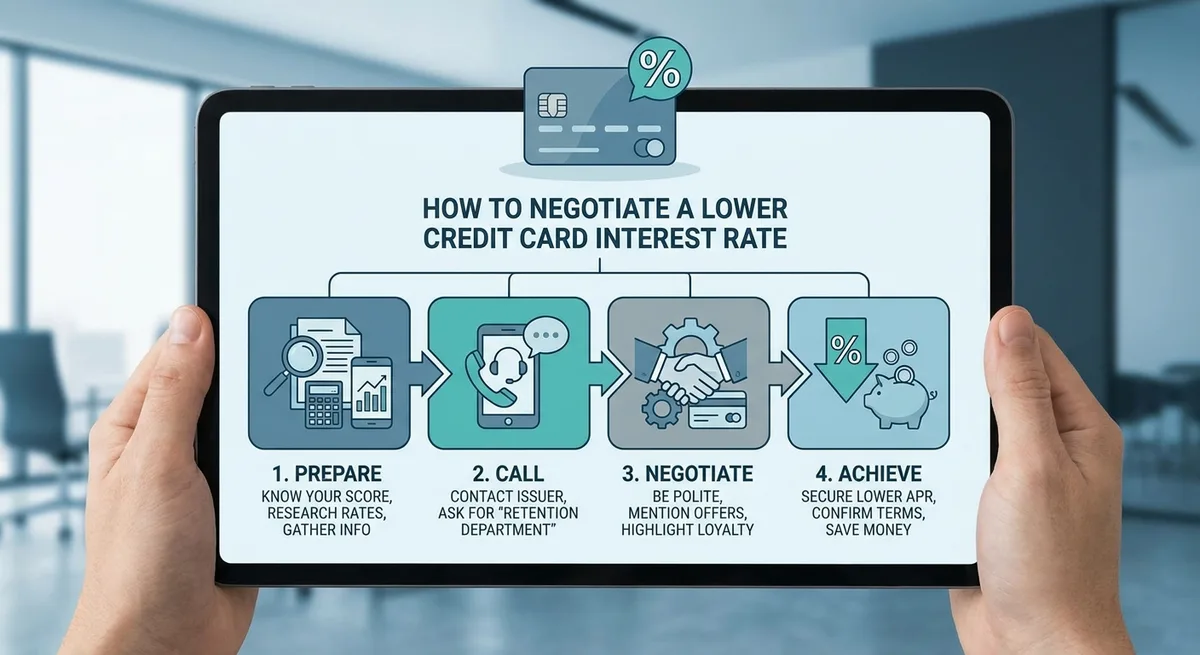
Are you feeling the weight of high credit card interest rates? You're not alone. Many people view their credit card APR (Annual Percentage Rate) as a fixed, unchangeable number, but that's a misconception. The truth is, your credit card interest rate can often be negotiated. This isn't just about saving a few dollars; it's about taking control of your financial well-being, reducing the cost of debt, and freeing up more of your hard-earned money for your goals and dreams.
Imagine what you could do with the money you save by getting a lower interest rate. Pay off debt faster? Boost your savings? Invest in your future? It's all within reach. This comprehensive guide will empower you with the knowledge and steps to confidently approach your credit card company and successfully negotiate a more favorable interest rate. Let's unlock the potential for significant savings and greater financial freedom together!
Understanding Your Credit Card Interest Rate
Before you dive into negotiation, it’s vital to understand what you’re dealing with. Your credit card interest rate, or APR, is the annual cost of borrowing money from your credit card company, expressed as a percentage. This rate can significantly impact how much you pay over time, especially if you carry a balance month-to-month. A high APR can mean that a substantial portion of your monthly payment goes directly to interest, making it harder to reduce your principal balance.
Credit card interest rates are influenced by various factors, including your credit score, the type of card you have, and the prevailing market rates. Those with excellent credit typically qualify for lower rates, while those with fair or poor credit often face higher APRs. Knowing your current rate is the first step in formulating your strategy to negotiate credit card interest rate down.
Why Your Credit Card Company Might Negotiate
You might wonder why a credit card company would agree to lower a rate that benefits them. The answer is simple: they want to keep you as a customer. Here are a few compelling reasons they might be open to negotiation:
- Customer Loyalty: If you've been a long-time customer with a good payment history, your loyalty is valuable. They'd rather keep you with a slightly lower rate than lose you to a competitor.
- Good Payment History: A consistent record of on-time payments demonstrates you're a responsible borrower, making you a less risky proposition for them. This is often the best leverage when you call credit card company lower rate.
- Competitive Market: The credit card market is highly competitive. If you can show them that other companies are offering better terms, they might match or beat those offers to retain your business.
- Fear of Attrition: They know that customers seeking lower rates are often considering switching cards or consolidating debt. Losing you means losing potential future revenue.
Preparing for Your Negotiation: The Essential Steps
Preparation is key to a successful negotiation. Think of it as gathering your tools before starting a project. The more prepared you are, the more confident and persuasive you’ll be.
Step 1: Gather Your Information
Before you make that call, ensure you have all the facts at your fingertips:
- Your Current APR: Check your latest statement.
- Your Payment History: Review your account activity. Ideally, you want to show a consistent record of on-time payments, especially over the last 6-12 months. This is crucial for how to lower credit card interest.
- Your Credit Score: Knowing your current credit score (or at least having a good idea of it) gives you an advantage. A strong score signals to the lender that you are a low-risk borrower. You can often check this for free through your bank, credit card issuer, or various online services.
- Length of Relationship: How long have you been a customer with this specific card? Loyalty can be a powerful negotiating chip.
- Balance Amount: If you carry a significant balance, highlight that. The company might be more inclined to lower your rate to ensure you can pay it down, which is better than risking default.
Step 2: Know Your Worth (Your Credit Profile)
Your credit profile is your story as a borrower. If you have a strong one, don't be shy about it. Emphasize:
- Your excellent payment history across all your accounts.
- Your relatively low credit utilization (the amount of credit you're using compared to your total available credit).
- Any recent improvements in your financial situation (e.g., a pay raise, securing a more stable job).
These points strengthen your position when you ask for lower credit card interest.
Step 3: Research Competing Offers
This is one of the best ways to negotiate credit card interest. Look for credit cards from other issuers that offer a lower APR than your current card, especially those with introductory 0% APR balance transfer offers. Note down specific rates and terms. This provides tangible leverage. You can confidently say, "I've been offered a card with a 15% APR, and my current rate is 22%. I'd prefer to stay with you, but I need a competitive offer." This strategy to reduce credit card APR is highly effective.
Making the Call: Your Negotiation Strategy
With your preparation complete, it's time to make the call. Remember, your goal is a productive conversation, not a confrontation.
Who to Call
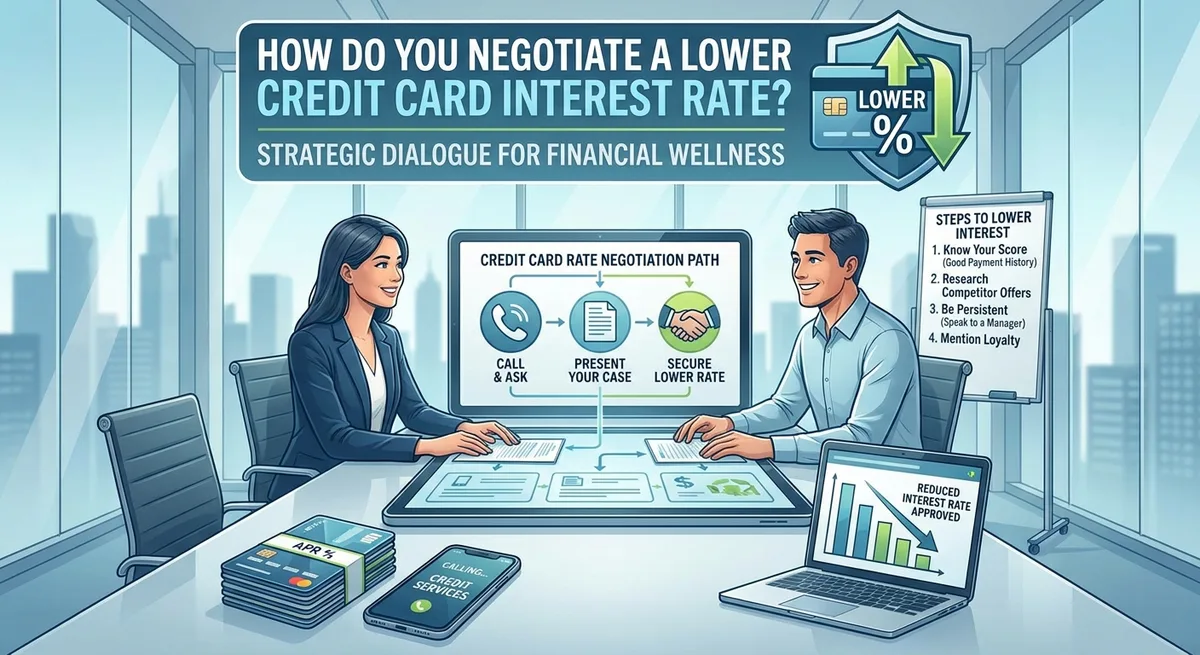
Start by calling the customer service number on the back of your card. When you connect with a representative, politely state your intention to discuss your interest rate. If the initial representative can't help, ask to be transferred to the "retention department" or "account services." These departments are specifically trained and authorized to make these types of adjustments to keep valuable customers.
What to Say (and How to Say It)
Your approach and tone are crucial for credit card interest rate negotiation. Be polite, confident, and articulate.
- Start with a clear, direct request: "Hello, I'm calling today to see if I'm eligible for a lower interest rate on my account."
- Highlight your value: "I've been a loyal customer for [X years] and have consistently made my payments on time."
- Mention competing offers: "I've noticed that other credit card companies are offering significantly lower APRs, some even with introductory 0% offers. While I'd prefer to stay with [Your Card Company], my current rate of [Your Current APR]% is making it difficult to pay down my balance efficiently."
- Explain your goal: "A lower interest rate would help me manage my finances more effectively and pay off my balance faster."
- Be prepared to answer questions: They might ask about your financial situation or why you're seeking a lower rate. Be honest but focus on how a lower rate benefits both you and them (e.g., enabling you to pay down your balance, which means you're less likely to default).
- Don't be afraid to ask for alternatives: If they can't lower your APR, ask if there are any other options, such as waiving an annual fee, offering a temporary promotional rate, or a balance transfer opportunity within their own products.
- Stay calm and professional: Even if you get a "no," remain courteous. You might try again in a few months, or escalate to a supervisor if you feel there's more room to negotiate.
Be Prepared for Different Outcomes
Not every negotiation will result in your ideal outcome, but any reduction is a win!
- Success! Congratulations! Confirm the new rate, when it takes effect, and ask for written confirmation.
- Partial Success: They might offer a smaller reduction or a temporary promotional rate. Accept what you can get and consider trying again later.
- Rejection: Don't be discouraged. Ask if there's anything you can do to qualify in the future. You can always try again in a few months, especially if your credit profile improves.
What to Do If Negotiation Isn't Immediately Successful
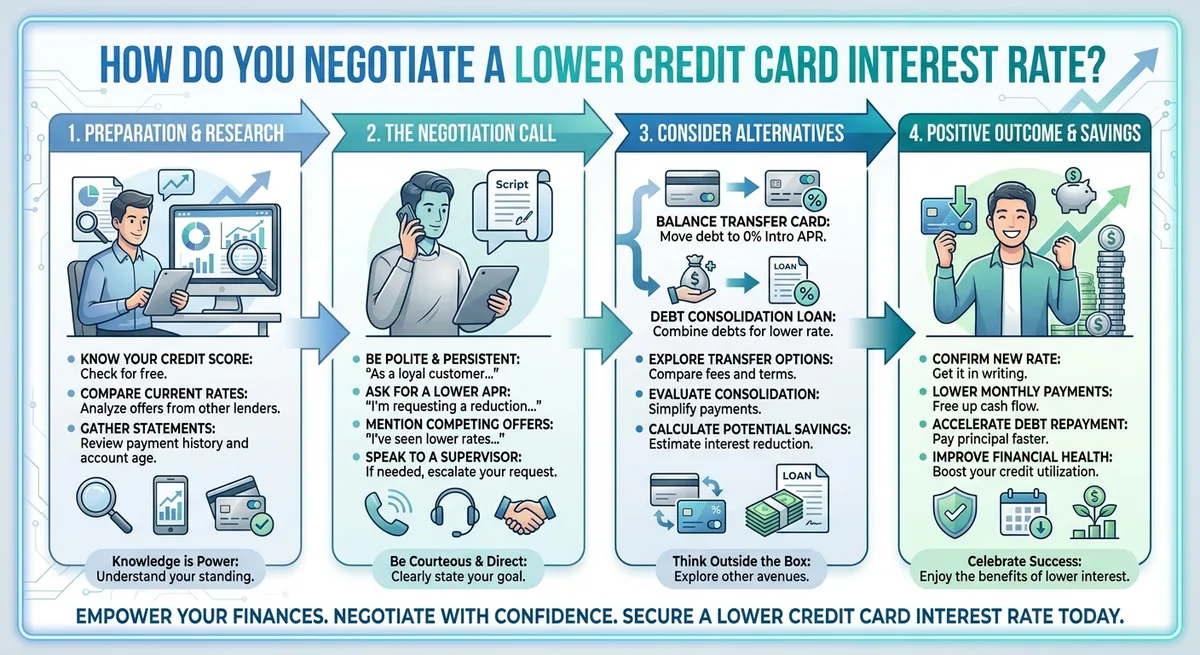
Even if you don't get a lower rate immediately, you have other powerful credit card interest reduction strategy options:
- Consider a Balance Transfer Card: If you have good credit, look for a new card offering a 0% introductory APR on balance transfers. This can give you a crucial window to pay down your high-interest debt without accumulating more interest. Be mindful of transfer fees and the expiration date of the promotional rate.
- Debt Consolidation Loan: A personal loan with a fixed, lower interest rate can consolidate multiple high-interest credit card debts into one manageable monthly payment.
- Credit Counseling: Non-profit credit counseling agencies can help you create a debt management plan, which sometimes includes negotiating lower rates with your creditors on your behalf.
- Aggressive Debt Payoff: Focus intensely on paying down the card with the highest interest rate first, while making minimum payments on others. Once that's paid, move to the next highest. This is known as the "debt avalanche" method.
Maintaining Your Lower Rate and Good Habits
Once you've secured a lower interest rate, it's essential to maintain good financial habits to keep it and continue improving your financial health.
- Continue Making On-Time Payments: This is paramount. Missing payments can cause your rate to revert to a higher penalty APR.
- Keep Credit Utilization Low: Aim to keep your balances below 30% (ideally 10%) of your total credit limit. This positively impacts your credit score.
- Review Your Statements Regularly: Always check for errors or unauthorized charges.
- Re-evaluate Annually: Your financial situation and the market change. Make it a habit to review your rates and consider renegotiating or seeking better offers periodically.
Take Control of Your Financial Future
Negotiating a lower credit card interest rate is a powerful step towards financial empowerment. It demonstrates proactivity, saves you money, and contributes significantly to reducing debt. Remember, credit card companies value their customers, and with the right preparation and approach, you have a strong chance of success. Don't let high interest rates dictate your financial journey – take the reins and start saving today!
Ready to gain more insights and strategies for managing your finances effectively? Subscribe to our newsletter for expert tips, guides, and the latest financial news directly in your inbox!
References & Sources
How can I lower the interest rate on my credit card? - Consumer Financial Protection Bureau
How to Get a Lower Credit Card Interest Rate - NerdWallet
How to Negotiate a Lower Credit Card Interest Rate - Experian