
How Do You Calculate the Annual Cost of a Balance?
Listen to this article
Play the narrated version or enjoy the podcast conversation.
How Do You Calculate the Annual Cost of a Balance?

Have you ever looked at your credit card statement or a loan document and wondered, "What am I really paying for this balance each year?" You’re not alone. The concept of the annual cost of a balance can seem complex, but understanding it is a cornerstone of smart financial management. It’s not just about the money you borrowed; it's about the interest you pay for the privilege of borrowing it over a year.
Many people focus solely on the minimum payment or the total principal amount, overlooking the significant impact of interest that accrues over time. This yearly interest expense can quietly eat away at your budget and extend the life of your debt, making it much more expensive in the long run. By learning how to determine yearly balance cost, you gain invaluable insight into your financial obligations and unlock the power to make more informed decisions about your debt.
This comprehensive guide from Lendellect is designed to demystify the process. We'll walk you through the key components, provide a clear, step-by-step approach to calculate annual interest cost, and empower you with the knowledge to take control of your financial future. Let's dive in and uncover the true cost of carrying a balance yearly.
Understanding the Basics: What is the Annual Cost of a Balance?
At its core, the annual cost of a balance refers to the total amount of interest you pay over a 12-month period on money you've borrowed and haven't fully repaid. This applies to various forms of debt, including credit cards, personal loans, and even lines of credit.
Think of it this way: when you borrow money, the lender charges you a fee for using their funds. This fee is called interest. The longer you take to repay the borrowed amount (the principal), and the higher the interest rate, the more you'll pay in these fees. The annual cost is essentially the sum of all those interest fees accumulated over a year. Understanding this calculation is crucial for anyone looking to manage their finances effectively and minimize their overall debt annual cost calculation.
Key Components That Influence Your Annual Cost
Several factors work together to determine how much interest you pay annually. Let's break down the most important ones:
Your Outstanding Balance
This is the amount of money you currently owe. The more you owe, the more interest you will accrue, assuming the same interest rate. Your outstanding balance can fluctuate throughout the year as you make payments and potentially add new charges. Most interest calculations are based on your average daily balance or your balance at the end of a billing cycle.
The Annual Percentage Rate (APR)
Your APR is perhaps the most significant factor. It represents the annual rate of interest charged on your balance, including any additional fees (though for simplicity, we'll focus on the interest component here). The APR is always expressed as a yearly rate, even if interest is calculated more frequently. For example, a 20% APR on a credit card means that, in theory, you'd pay 20% of your outstanding balance in interest over a year if the balance remained constant. This is the starting point for any annual interest cost formula.
Compounding Frequency
This is where things can get a bit tricky, but it's crucial to understand. While the APR is an annual rate, interest is usually calculated and added to your balance more frequently—often daily or monthly. This process is called compounding. When interest compounds, the interest you just accrued is added to your principal, and then the next period's interest is calculated on that new, slightly larger principal. This means you start paying interest on your interest. The more frequently interest compounds (e.g., daily versus monthly), the faster your balance can grow if you're not making significant payments.
Minimum Payments vs. Actual Payments
Making only the minimum payment often means a larger portion of your payment goes towards interest, with very little reducing the principal. This dramatically extends the time it takes to pay off the debt and significantly increases the total amount of interest you'll pay over the life of the loan. To truly get a handle on the credit card annual cost calculation, you must consider your payment habits.
Step-by-Step Guide: Calculating the Annual Cost of a Balance
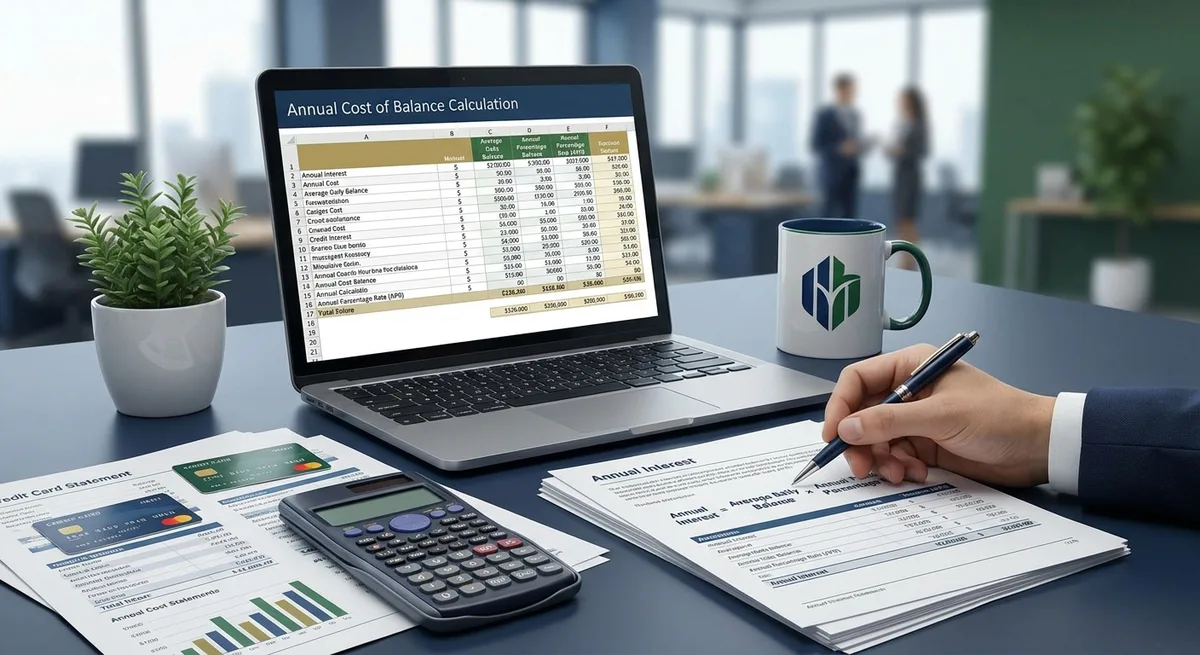
Let's break down how to calculate total interest paid annually. For simplicity, we'll focus on a credit card balance with monthly compounding, which is common. Keep in mind that for a precise annual calculation, you'd need to track monthly changes to your balance.
Step 1: Gather Your Information
- Outstanding Balance: Find this on your latest statement. For a yearly projection, you might use your average balance or start with your current balance.
- Annual Percentage Rate (APR): Also on your statement or loan agreement. Convert this to a decimal for calculations (e.g., 20% APR becomes 0.20).
- Compounding Frequency: Most credit cards compound interest daily or monthly. For our example, we'll assume monthly compounding.
Step 2: Determine Your Periodic Interest Rate
Since interest usually compounds more frequently than annually, you need to convert your APR into a periodic rate. If interest compounds monthly, divide the APR by 12:
Periodic Interest Rate = APR / Number of Compounding Periods per Year
Example: If your APR is 20% (0.20) and it compounds monthly (12 times a year):
- Periodic Interest Rate = 0.20 / 12 = 0.016667 (approximately 1.67% per month)
Step 3: Calculate Monthly Interest and Project Annually (Simplified Example)
Let's assume you have a credit card with an outstanding balance of $2,000 and an APR of 20%, compounded monthly. You make a consistent payment of $100 each month.
Month 1:
- Starting Balance: $2,000
- Interest for Month 1 = Starting Balance × Periodic Interest Rate
- Interest for Month 1 = $2,000 × (0.20 / 12) = $2,000 × 0.016667 = $33.33
- Your $100 payment is applied: First, it covers the interest ($33.33). The remainder reduces your principal: $100 - $33.33 = $66.67.
- New Balance (end of Month 1): $2,000 - $66.67 = $1,933.33
Month 2:
- Starting Balance: $1,933.33
- Interest for Month 2 = $1,933.33 × 0.016667 = $32.22
- Principal reduction: $100 - $32.22 = $67.78
- New Balance (end of Month 2): $1,933.33 - $67.78 = $1,865.55
As you can see, the interest amount decreases slightly each month as your principal balance goes down (assuming you make payments that exceed the interest). To calculate the annual cost of a balance more accurately, you would repeat this process for 12 months, summing up the interest paid each month. This is essentially creating a simple amortization schedule for the year.
If you *never* made payments and the balance remained constant (which is unrealistic for most debts), the annual interest would simply be: Outstanding Balance × APR. However, because balances fluctuate and interest compounds, this simplified calculation only gives you a rough estimate of the interest generated if the balance was fixed for the entire year.
A More Realistic Annual Cost Calculation
For a truly precise loan balance annual cost or credit card annual cost calculation, you need to sum the actual interest charges from your statements over a 12-month period. Many credit card statements will show "Year-to-Date Interest Paid," which can give you this exact figure. For loans with fixed payments and a set term, an amortization schedule will clearly lay out the total interest paid each year.
Alternatively, many online financial calculators can help you project the total interest paid over a year or the life of a loan by inputting your current balance, APR, and monthly payment. These tools often account for compounding automatically, providing a much more accurate estimate than manual calculations, especially when your balance changes regularly.
Why Understanding This Calculation Matters
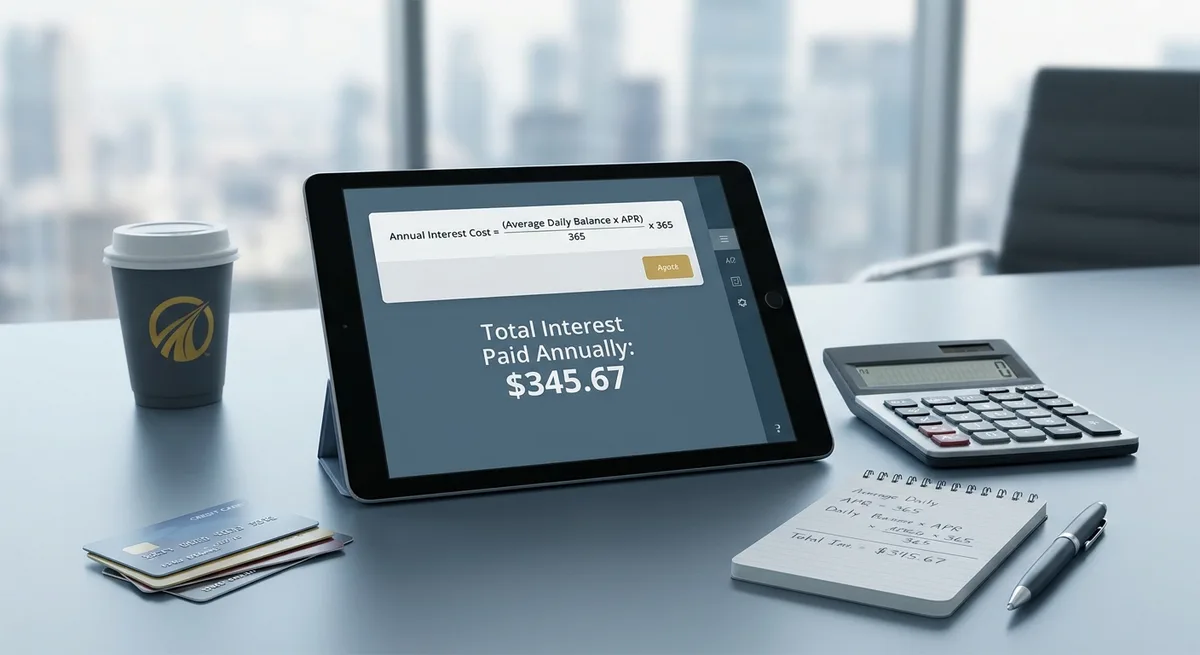
Knowing your interest expense calculation annual isn't just an academic exercise; it's a powerful tool for financial empowerment:
- Budgeting and Financial Planning: It allows you to accurately account for your debt costs, preventing surprises and helping you allocate funds more effectively.
- Motivation to Pay Down Debt: Seeing the actual dollar amount you're paying in interest each year can be a strong motivator to accelerate debt repayment. You're not just paying off debt; you're saving significant money on future interest.
- Informed Decision-Making: Whether you're considering a new loan, a balance transfer, or consolidating debt, understanding the annual cost helps you compare options and choose the most financially beneficial path.
- Recognizing the "Hidden" Cost: The total interest paid over the life of a loan can often be surprisingly high. Being aware of the annual cost of balance makes these hidden costs transparent.
Strategies to Reduce Your Annual Cost of a Balance
Once you understand how to calculate this cost, the next logical step is to explore ways to minimize it:
- Pay More Than the Minimum: Even a small extra payment can significantly reduce your principal balance, leading to less interest accruing in subsequent periods and a lower total annual interest cost.
- Prioritize High-Interest Debt: Focus on paying off debts with the highest APRs first. This "debt avalanche" strategy saves you the most money on interest over time.
- Negotiate Lower APRs: If you have a good payment history, contact your credit card issuer or lender and ask if they can lower your interest rate. You might be surprised by their willingness to work with you.
- Consider a Balance Transfer Card: If you have good credit, you might qualify for a balance transfer card with a 0% introductory APR for a certain period. This gives you time to pay down your principal without accruing new interest (be aware of transfer fees and the regular APR after the intro period).
- Debt Consolidation: For multiple debts, consolidating them into a single loan with a lower interest rate can simplify payments and reduce your overall annual interest expense.
- Avoid New Debt: The most straightforward way to reduce your annual interest cost is to avoid adding to your outstanding balances.
Conclusion
Understanding how to calculate the annual cost of a balance is a fundamental skill for anyone navigating their financial journey. It sheds light on the true expense of borrowing money and empowers you to make smarter choices. While the calculations can seem daunting initially, breaking them down into simple steps reveals a clear path forward. Remember, knowledge is power, especially when it comes to your money.
By actively calculating and striving to reduce your annual cost of balance, you're not just saving money; you're building a stronger, more secure financial future for yourself. Take the reins of your debt, understand its true cost, and watch your financial confidence grow.
Want more practical financial insights and tips delivered straight to your inbox?
Subscribe to the Lendellect Newsletter Today!
References & Sources
Investopedia: Annual Percentage Rate (APR)
Consumer Financial Protection Bureau (CFPB): Understanding Credit Card Interest Rates and Fees