
Does Carrying a Small Balance Affect Your Grace Period?
Listen to this article
Play the narrated version or enjoy the podcast conversation.
Does Carrying a Small Balance Affect Your Grace Period?
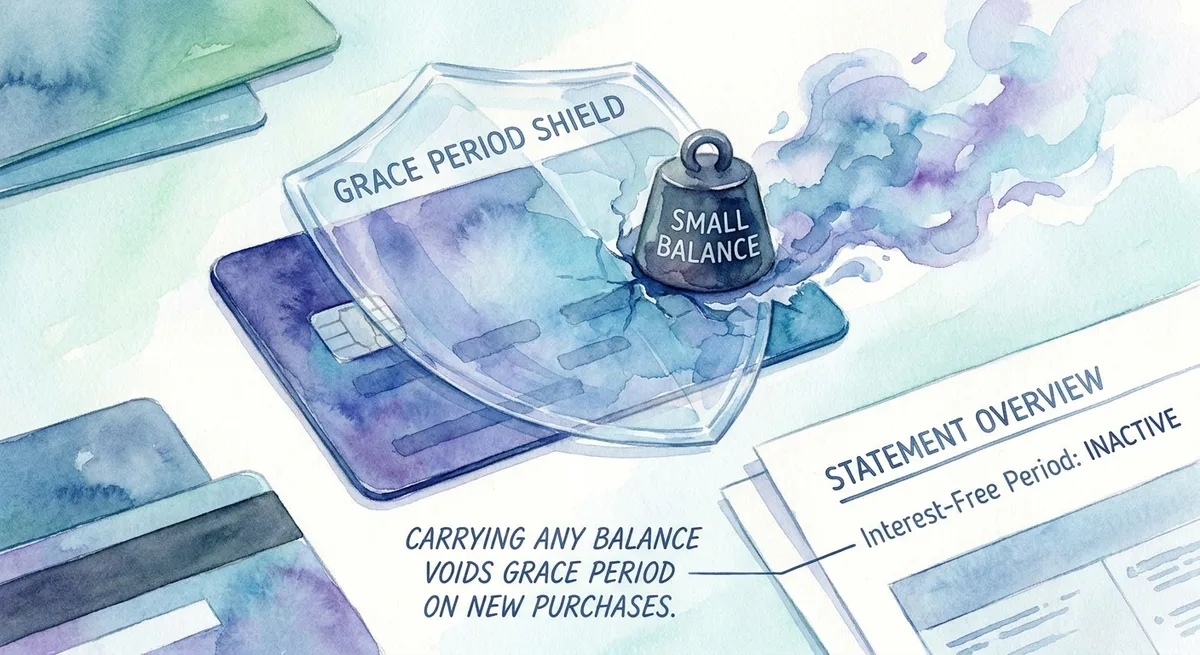
Ah, the credit card grace period – a financial superpower that allows you to make purchases without immediately incurring interest. It's a fantastic benefit, designed to give you a window of opportunity to pay off your balance in full and enjoy interest-free spending. But what happens if you carry over just a small balance? A few dollars here, a few cents there… surely that won't void your grace period, right?
This is a common question, and the answer is crucial for anyone using a credit card. Many consumers mistakenly believe that if they pay off most of their balance, or if the outstanding amount is negligible, they'll still be exempt from interest on new purchases. Unfortunately, this is a widespread misconception that can lead to unexpected interest charges. Let's delve into the intricacies of the credit card grace period and uncover how even a seemingly insignificant balance can impact it.
Understanding the Credit Card Grace Period
Before we address the impact of a small balance, let's solidify our understanding of what a grace period is. Simply put, a credit card grace period is the time between the end of your billing cycle (statement close date) and your payment due date, during which no interest is charged on new purchases. This "interest-free period" typically lasts at least 21 days, as mandated by federal law, but can extend to 25 days or more, depending on your card issuer.
The primary purpose of the grace period is to allow cardholders to pay off their new purchases in full before interest begins to accrue. If you pay your entire statement balance by the due date, you effectively use your credit card as a short-term, interest-free loan for those purchases. This is the ideal way to leverage a credit card, enjoying convenience and rewards without paying extra.
The Crucial Rule: Pay Your "Statement Balance" in Full
Here's where the small balance myth is debunked. To benefit from the grace period on new purchases, you must pay your entire statement balance in full by the due date. This isn't just about paying the minimum amount due; it's about paying every single dollar listed on your statement balance.
If you carry any balance over from the previous statement – even a single dollar or a few cents – you generally lose your grace period for *all new purchases* made during the *current* billing cycle. This means interest will start accruing on those new purchases from the transaction date, not the payment due date.
Why Even a Small Balance Matters
Credit card companies are quite particular about the "full payment" rule. From their perspective, if you don't pay your statement balance in its entirety, you are demonstrating that you're using their credit facility, and thus, interest charges apply. The size of the outstanding balance doesn't typically factor into this rule; it's the mere existence of a carryover.
Let's illustrate:
- Scenario 1 (Grace Period Intact): Your statement balance is $500. You pay $500 by the due date. Any new purchases made after the statement close date will be interest-free until the next due date, assuming you pay that statement in full too.
- Scenario 2 (Grace Period Lost): Your statement balance is $500. You pay $499.99 by the due date, leaving a small $0.01 balance. For any new purchases you make in the subsequent billing cycle, interest will begin accruing on those purchases from the moment they are made. You will also pay interest on that $0.01.
This can lead to a snowball effect. Once you lose your grace period, interest accrues daily on your outstanding balance, including any new purchases. You'll then have to pay that accumulated interest in addition to your new purchases. To regain your grace period, you'll typically need to pay off your entire outstanding balance (including any accrued interest) and then pay the *next* statement balance in full as well.
Understanding Interest Calculation Methods
When you lose your grace period, credit card companies usually employ an "average daily balance" method to calculate interest. This means they take the sum of your daily balances during the billing cycle and divide it by the number of days in the cycle. Interest is then applied to this average daily balance. Even a small balance carried over can significantly increase your average daily balance, leading to more interest charges on future purchases than you might expect.
When Does Your Grace Period Get Reinstated?
The good news is that losing your grace period isn't permanent. To get it back, you typically need to pay your entire outstanding balance (which includes the original balance you carried over plus any interest that has accrued) and then ensure you pay the *next* full statement balance by its due date as well. It usually requires two consecutive full payments to re-establish the grace period for new purchases.
For instance, if you carry a balance in January, you'll pay interest on new February purchases. To get your grace period back, you'd need to pay off your entire February statement balance (which includes the January carryover and interest) by its due date. Then, you'd need to pay your entire March statement balance (which would ideally only consist of new purchases) by *its* due date. Only then would new purchases made in April potentially benefit from a grace period.
Exceptions and Nuances
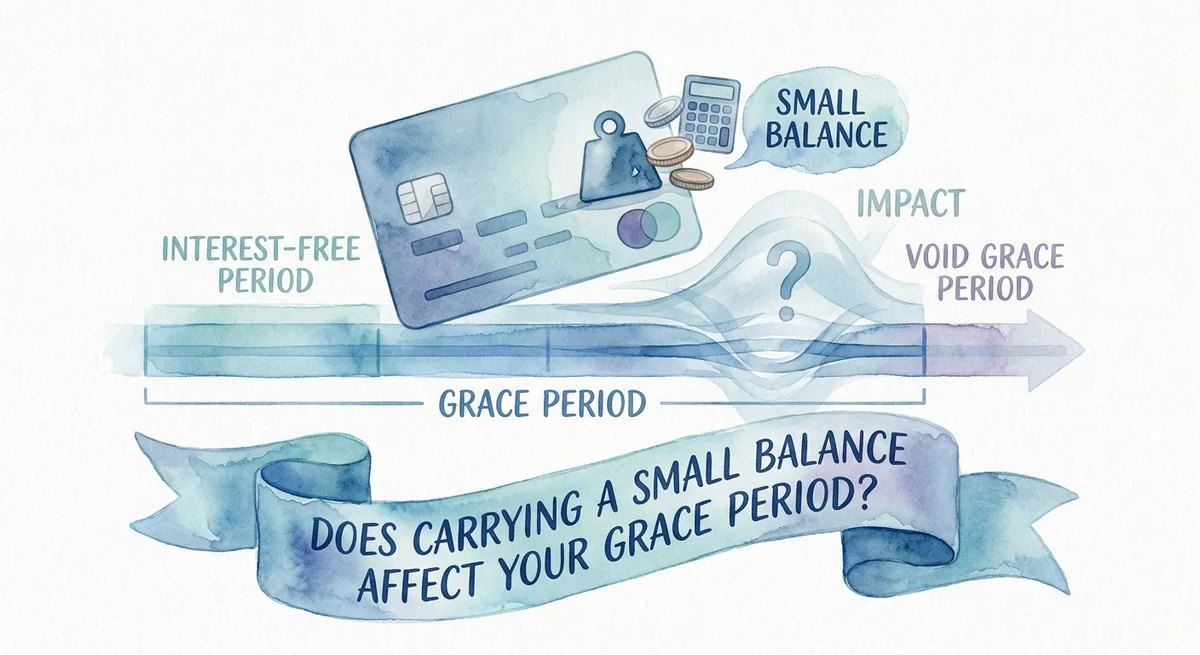
While the "pay in full" rule is generally steadfast for new purchases, there are a few scenarios where grace periods behave differently:
- Cash Advances: Cash advances typically do not have a grace period. Interest usually begins accruing immediately from the date of the transaction.
- Balance Transfers: Similar to cash advances, balance transfers generally do not come with a grace period. Interest starts accruing right away unless a promotional 0% APR offer is in effect.
- Promotional 0% APR Offers: These are a different beast. While they offer an interest-free period, they aren't the standard grace period. If you have a 0% APR on purchases, you won't be charged interest on those specific purchases for the promotional duration, even if you carry a balance. However, if you don't pay the full promotional balance by the end of the offer, interest can sometimes be retroactively applied to the original purchase date (deferred interest), so always read the terms carefully.
Strategies to Maintain Your Grace Period
The simplest way to avoid interest charges and keep your grace period intact is to adopt disciplined payment habits:
- Always Pay the Statement Balance in Full: This is the golden rule. Make it your primary goal each month.
- Set Up Automatic Payments: Many card issuers allow you to set up auto-pay for your "statement balance." This ensures you never miss a payment and always pay the full amount, eliminating the risk of losing your grace period due to an oversight.
- Monitor Your Statements: Regularly check your billing statements for the due date and the exact statement balance. Understanding these details is key.
- Avoid Carrying Any Balance: Reiterate this to yourself. Whether it's $1 or $100, carrying a balance has the same effect on your grace period.
- Budget Effectively: Only spend what you can afford to pay back each month. If you're struggling to pay your statement in full, it might be a sign to re-evaluate your spending habits.
Conclusion
The notion that carrying a small balance won't affect your credit card grace period is a pervasive and costly myth. In reality, carrying even the tiniest outstanding amount from your previous statement balance will almost certainly void your grace period for new purchases, causing interest to accrue immediately from the transaction date. To truly benefit from the interest-free spending window that a grace period offers, you must consistently pay your full statement balance by the due date, every single month.
Understanding this fundamental rule is a cornerstone of responsible credit card management. By being vigilant with your payments, you can save money on interest, build a positive credit history, and fully leverage the benefits of your credit card without falling into common financial traps.
To learn more about optimizing your credit card usage and avoiding unnecessary fees, read more on our site.
References & Sources
How does a credit card grace period work?
Credit Card Grace Period: What It Is and How It Works
Credit Card Grace Period: Definition, How It Works, and How to Use It